

Ovulation & Fertility Calculator
Your Fertility Results
Fertility & Ovulation Calculator
A Fertility & Ovulation Calculator is a simple online tool that estimates when ovulation may occur and identifies the days when you are most likely to conceive.
In 2026, fertility calculators have become a convenient way to track menstrual cycles, estimate ovulation dates, and understand the fertile window. Whether you are trying to get pregnant or simply want to learn more about your cycle, a Fertility & Ovulation Calculator
can provide a useful starting point.
What Is a Fertility & Ovulation Calculator?
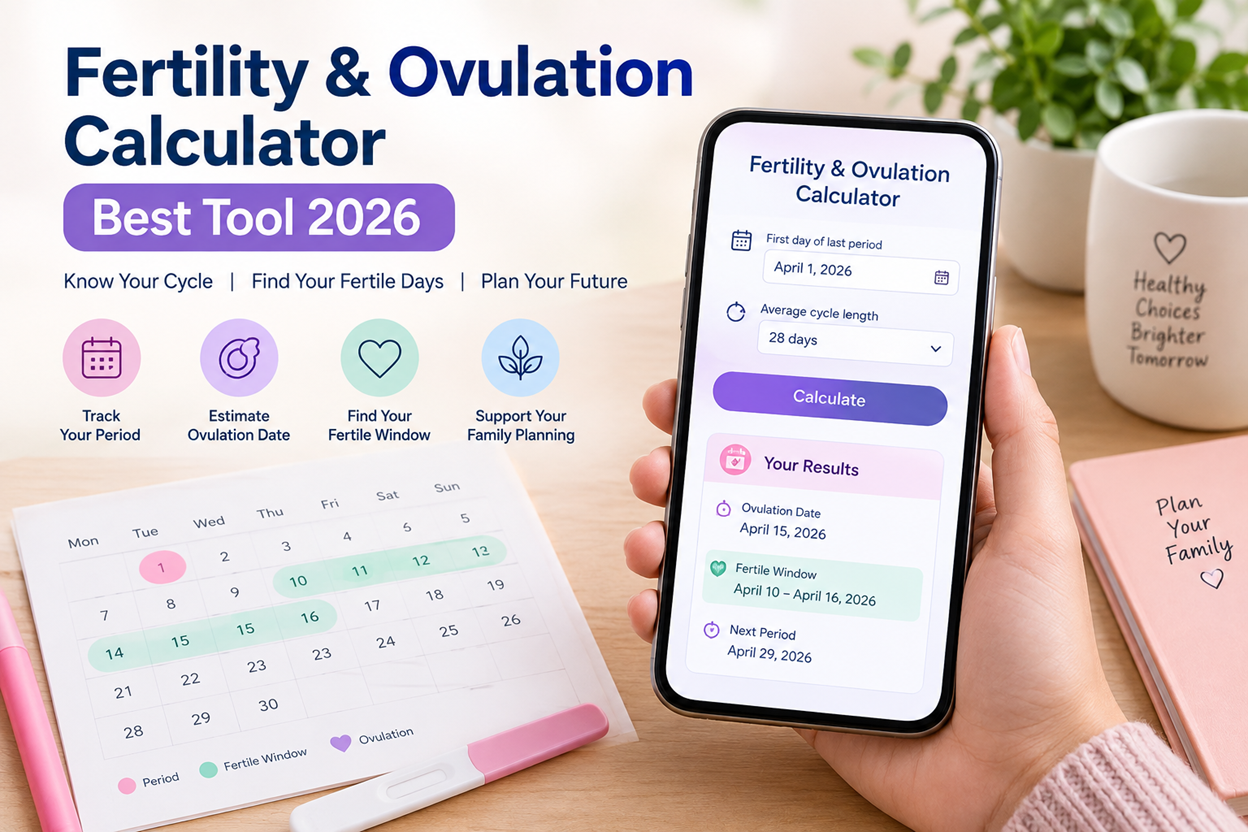
A Fertility & Ovulation Calculator uses information about your menstrual cycle to estimate your next ovulation date and fertile window. Usually, you enter the first day of your last menstrual period and your average cycle length.
The calculator then estimates when ovulation may happen. Since sperm can survive for several days and an egg remains viable for a limited time after ovulation, the days surrounding ovulation are generally considered the most fertile part of the cycle.
It is important to remember that an ovulation calculator provides an estimate, not a medical diagnosis or guarantee of pregnancy. Ovulation can change from month to month, particularly when cycles are irregular.
How Does an Ovulation Calculator Work?
Most ovulation calculators use the length of your menstrual cycle to estimate ovulation.
For example, if you have a regular 28-day cycle, ovulation is often estimated around day 14. However, the exact timing can vary between individuals and from one cycle to another.
A typical calculator considers:
- The first day of your last period
- Your average menstrual cycle length
- Your estimated ovulation date
- Your fertile window
- Your next expected period
The calculator uses these details to provide an estimated fertility calendar. Tracking this information over several cycles may help you understand your personal pattern more clearly.
How to Use a Fertility & Ovulation Calculator
Using a fertility calculator is usually quick and easy. Follow these steps:
1. Enter the First Day of Your Last Period
Start with the date when your most recent menstrual period began. This is considered cycle day 1.
2. Enter Your Average Cycle Length
Your cycle length is counted from the first day of one period to the first day of the next. Many people have cycles close to 28 days, but normal cycles can be shorter or longer.
3. Calculate Your Fertile Window
After entering the information, the tool estimates your likely ovulation date and fertile days.
4. Track Your Cycle
For better understanding, record your period dates and cycle length each month. This can help you identify patterns and recognize changes in your cycle.
What Is the Fertile Window?
The fertile window is the period of the menstrual cycle when pregnancy is most likely to occur. It includes the days leading up to ovulation and the time around ovulation.
Sperm can remain alive in the reproductive tract for several days under suitable conditions, while the egg has a much shorter lifespan after ovulation. Because of this, having intercourse during the days before and around ovulation may increase the chance of conception.
A fertility calculator estimates this window based on your cycle information. However, the actual fertile window can vary because ovulation does not always happen on exactly the same day each month.
Signs of Ovulation to Watch For
Using a Fertility & Ovulation Calculator together with physical signs can give you a better understanding of your cycle.
Common signs around ovulation may include:
- Changes in cervical mucus
- A slight rise in basal body temperature
- Mild pelvic or abdominal discomfort
- Increased sexual desire
- Breast tenderness
- Changes in mood or energy
Not everyone experiences noticeable ovulation symptoms. Therefore, the absence of symptoms does not necessarily mean that ovulation has not occurred.
Benefits of Using an Ovulation Calculator
A Fertility & Ovulation Calculator can be helpful for several reasons.
Easy to Use
Most online calculators require only a few basic details. You do not need complicated medical knowledge to use one.
Helps Identify Fertile Days
The calculator can estimate the days when conception may be more likely, helping couples plan intercourse around the fertile window.
Supports Cycle Tracking
Regularly recording your periods can help you understand your menstrual cycle and notice changes over time.
Convenient and Accessible
An online fertility calculator can be used from a smartphone, tablet, or computer whenever you need it.
Useful for Family Planning
Whether you are actively trying to conceive or simply learning about your reproductive cycle, an ovulation calculator can be a convenient planning tool.
How Accurate Is a Fertility & Ovulation Calculator?
The accuracy of an ovulation calculator depends largely on the regularity of your menstrual cycle and the information you provide.
For people with highly regular cycles, calendar-based calculations may provide a reasonable estimate. However, the prediction may be less reliable when periods are irregular or ovulation varies significantly.
Factors such as stress, illness, travel, changes in sleep, weight changes, breastfeeding, and hormonal conditions can affect menstrual cycles.
For more precise ovulation tracking, some people use additional methods such as ovulation predictor kits (OPKs), basal body temperature tracking, or cervical mucus monitoring.
Ovulation Calculator for Irregular Periods
If you have irregular periods, a standard fertility calculator may not accurately predict your ovulation date. An irregular cycle can make calendar-based calculations more difficult because the length of the cycle and timing of ovulation may change.
If your periods are consistently irregular, consider tracking your cycle for several months and discussing your concerns with a healthcare professional. A doctor may recommend appropriate tests or other methods for identifying ovulation.
Can a Fertility & Ovulation Calculator
Help You Get Pregnant?
An ovulation calculator can help identify the time when conception may be more likely, but it cannot guarantee pregnancy.
Age, sperm health, egg health, reproductive health, timing, and many other factors can influence fertility. For this reason, the calculator should be viewed as a planning aid rather than a fertility treatment.
If you have been trying to conceive without success, speaking with a qualified healthcare professional can help determine whether further evaluation is appropriate.
Fertility Calculator vs. Ovulation Calculator
The terms fertility calculator and ovulation calculator are often used interchangeably, but they can have slightly different purposes.
An ovulation calculator mainly estimates when ovulation may occur. A fertility calculator generally focuses on identifying the broader fertile window and may also provide information about expected periods and cycle dates.
Both tools use menstrual-cycle information to make predictions and should be considered estimates.
Tips for Better Fertility Tracking
For more useful results, keep the following tips in mind:
- Record the first day of every period.
- Track your cycle for several months.
- Note changes in cervical mucus.
- Consider using ovulation tests if appropriate.
- Pay attention to changes in your cycle.
- Do not rely entirely on a calendar prediction.
- Consult a healthcare professional if you have fertility concerns.
Final Thoughts | Fertility & Ovulation Calculator
A Fertility & Ovulation Calculator is a simple and convenient tool for estimating ovulation and identifying potentially fertile days. The Best Fertility & Ovulation Calculator 2026 should be easy to use, provide clear results, and help users understand their menstrual cycle without unnecessary complexity.
While these calculators can be useful for family planning, they are not a substitute for medical advice and cannot guarantee when ovulation will occur or whether pregnancy will happen. Combining calculator results with cycle tracking and other fertility-awareness methods may provide a more complete picture of your reproductive cycle.
If you are concerned about irregular periods, ovulation, or difficulty conceiving, consider speaking with a healthcare professional for personalized guidance.
Also checkout
Also visit our payoff calculator at All payoffcalculators
Frequently Asked Questions (FAQs) | Fertility & Ovulation Calculator
1. What is a Fertility & Ovulation Calculator?
A Fertility & Ovulation Calculator is an online tool that estimates your ovulation date and fertile window based on your last menstrual period and average cycle length.
2. How accurate is a Fertility & Ovulation Calculator?
An ovulation calculator provides an estimate rather than an exact prediction. It may be more useful for people with regular menstrual cycles, while irregular cycles can make predictions less reliable.
3. When is the best time to get pregnant?
The most fertile time is generally the days leading up to ovulation and around the day of ovulation. Tracking your cycle can help identify this potentially fertile window.
4. Can I use an Ovulation Calculator with irregular periods?
Yes, you can use one, but the results may be less accurate because ovulation can occur at different times in irregular cycles. Additional fertility-tracking methods may provide more useful information.
5. Can an Ovulation Calculator guarantee pregnancy?
No. An ovulation calculator can help estimate fertile days, but it cannot guarantee pregnancy. Many factors affect fertility, including age, reproductive health, timing, and sperm health.
